You won't see the ROI on day one. You'll feel it at month twelve.
The ROI on branding shows up over months, not days.
It compounds through shorter sales cycles, stronger pricing, better hires, and consistent positioning. The cost of not investing is visible immediately and grows every week.
Every founder I've ever worked with has asked some version of the same question before signing off on a brand project. "What's the return on this?"
It's a fair question. You're running a business. You need to know where the money goes and what it does when it gets there. I'd worry if you didn't ask.
But here's what I've learned after twenty years of doing this work: branding doesn't return the way a paid ad campaign returns. There's no dashboard you can check on day two that shows you a clean percentage. No conversion spike you can screenshot and send to your board.
That doesn't mean the return isn't there. It means it shows up differently. And if you know where to look, it shows up everywhere.

What happens in the twelve months after
The first thing most founders notice is the sales conversations. They change. Not overnight, but steadily. Prospects arrive warmer. They've already looked at your site, read your positioning, got a sense of what you're about. The conversation starts further along. You spend less time explaining what you do and more time talking about what you can do for them.
That's strategy doing its job. When your positioning is clear, when your messaging says exactly who you're for and what you believe, it filters. The wrong people don't get in touch. The right people arrive half-convinced.
When your brand looks like the business you've actually built, you show up differently. You send the proposal with confidence. You share the website without a caveat.
Then there's the visual identity piece. I've watched founders physically carry themselves differently after a rebrand. That sounds soft, but it isn't. When your brand looks like the business you've actually built (not the one you started five years ago in your spare room), you show up differently. You send the proposal with confidence. You share the website without a caveat. You stop saying "ignore the branding, we're working on it" in pitch meetings.
Around the three-month mark, pricing conversations start to shift. Not because you've changed your prices (though many founders do), but because the brand now signals a level of quality that matches what you actually deliver. There's less pushback. Less haggling. Fewer "can you do it for less?" emails. The brand is doing the heavy lifting before you even open your mouth.
By six months, hiring changes. Good candidates start finding you instead of the other way around. I had a client tell me they got three unsolicited applications in a month after their rebrand, from people who said the company "looked like somewhere they wanted to work." That's not fluffy brand magic. That's a clear identity doing what it's supposed to do: attracting the right people.
By twelve months, the compounding is obvious. The clearer positioning has sharpened your marketing. The stronger visual identity has made every touchpoint more consistent. The confidence that comes from having a brand that actually fits has changed how you make decisions, what you say yes to, what you walk away from. None of these things show up in a single metric. All of them show up in the trajectory of the business.
Keeps the progression visual without being decorative.
I saw this firsthand with a client in financial services. We built the brand from strategy through to full identity system. The positioning work shaped how they talked about themselves. The visual identity changed how the market saw them. Over the months that followed, it influenced new business, hiring, and eventually played a role in acquisition conversations. The founder, a numbers person by trade, wrote about the experience unprompted. Not about the design. About what the brand did for the business. When the accountant tells you the intangible asset was worth the investment, that's about as strong a signal as you'll get.
And here's the thing: just because you can't predict the ROI on day one doesn't mean you can't measure it. You just have to know what to track. Look at your sales cycle length before and after. Look at your close rate. Look at the ratio of inbound enquiries to outbound effort. Track your average deal value and whether you're discounting less. Check your website conversion rate, not just traffic but the percentage of visitors who actually get in touch. Monitor cost per hire and time to fill roles. None of these will spike the week your new brand launches. But pull the numbers at three months, six months, twelve months, and the pattern is hard to argue with. The ROI was always there. It just needed time to compound.
Strategy and identity are two sides of the same coin
When founders think about branding, most default to the visual side. The logo, the colours, the website. That's understandable. It's the most visible output.
But visual identity without strategy is decoration. It might look good, but it's not anchored to anything. It can't do any of the things I just described because it wasn't built to solve a business problem. It was built to look nice.
Strategy is the part that does the hard work underneath. It's the positioning that tells the market where you sit and why it matters. It's the messaging framework that gives you the words to explain what you do in a way that resonates. It's the clarity on who your ideal client is, what they care about, and what makes you the obvious choice.
Strategy without identity stays trapped in a document nobody reads. Identity without strategy is a good-looking brand that doesn't know what it stands for.
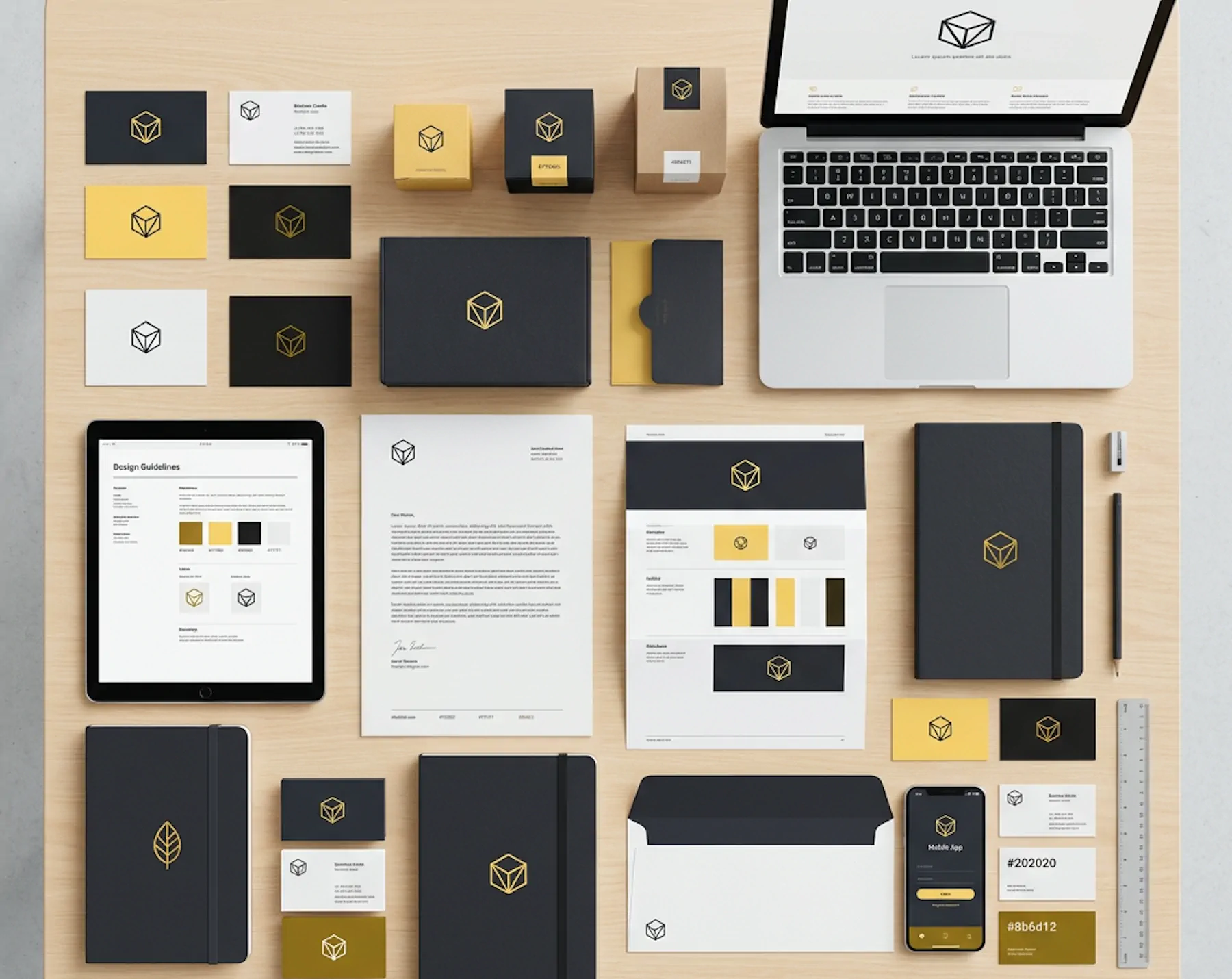
Identity makes all of that visible. It takes the strategic decisions and turns them into something people can see, feel, and remember. The typography that signals confidence. The colour palette that separates you from every competitor using the same safe navy blue. The brand system that makes your proposal, your website, your social presence, and your pitch deck all feel like they came from the same company. Because they did.
You need both. Strategy without identity stays trapped in a document nobody reads. Identity without strategy is a good-looking brand that doesn't know what it stands for. The return comes when they work together.
The cost of not doing it
Here's the thing founders don't calculate: the cost of standing still.
If the ROI of investing in brand is hard to measure on day one, the cost of not investing is painfully visible right now. You just might not have named it yet.
It's the sales cycle that takes twice as long as it should because prospects can't tell from your website whether you're a ten-person company or a freelancer with a Canva logo.
It's the pricing pressure you accept because your brand doesn't signal the value you deliver. So you compete on cost, even though your work is worth more.
It's the talent who looked at your LinkedIn, looked at your website, and quietly accepted the other offer. You'll never know they were interested. They didn't bother telling you.
It's the referral who landed on your site, felt uncertain, and went with the competitor whose brand made them feel safer. Not because the competitor was better. Because they looked better.
I call this the confidence tax. It's the cumulative cost of operating with a brand you've outgrown. Every week it compounds. Every missed opportunity, every discounted proposal, every prospect who ghosted after checking your website. You're paying it whether you measure it or not.
And here's what makes it worse: while you're standing still, your competitors aren't. Every month you delay, someone else in your space is investing in their brand, sharpening their positioning, showing up more clearly. The gap between where you are and where they are isn't staying the same. It's growing. You're not just paying the cost of inaction. You're falling behind the people who decided to act. The longer you wait, the further you have to travel to catch up, and the more it costs when you finally do.
The ROI question, reframed
The real question isn't "what's the return on branding?" It's "how long do I want to keep paying the cost of not doing it?"
Because the gap between where your business is and where your brand is doesn't stay the same. It widens. Your business grows, your reputation builds, your ambitions increase. And your brand sits there, frozen in time, telling a story about a company that doesn't exist anymore.
The founders I work with don't come to me because they woke up one morning excited about typography. They come because they've hit a ceiling and they can feel the brand is part of it. Something isn't converting. Something isn't landing. The business is better than it looks, and it's starting to cost them.
The ROI on branding isn't a number you calculate before you start. It's a reality you recognise twelve months after. And by then, the only question you'll have is why you didn't do it sooner.